Pneumatic Braking System
Project Overview
As a fluids engineer at Texas Guadaloop, UT Austin's hyperloop engineering team, I developed an emergency pneumatic braking system designed to operate safely at 120 psi.
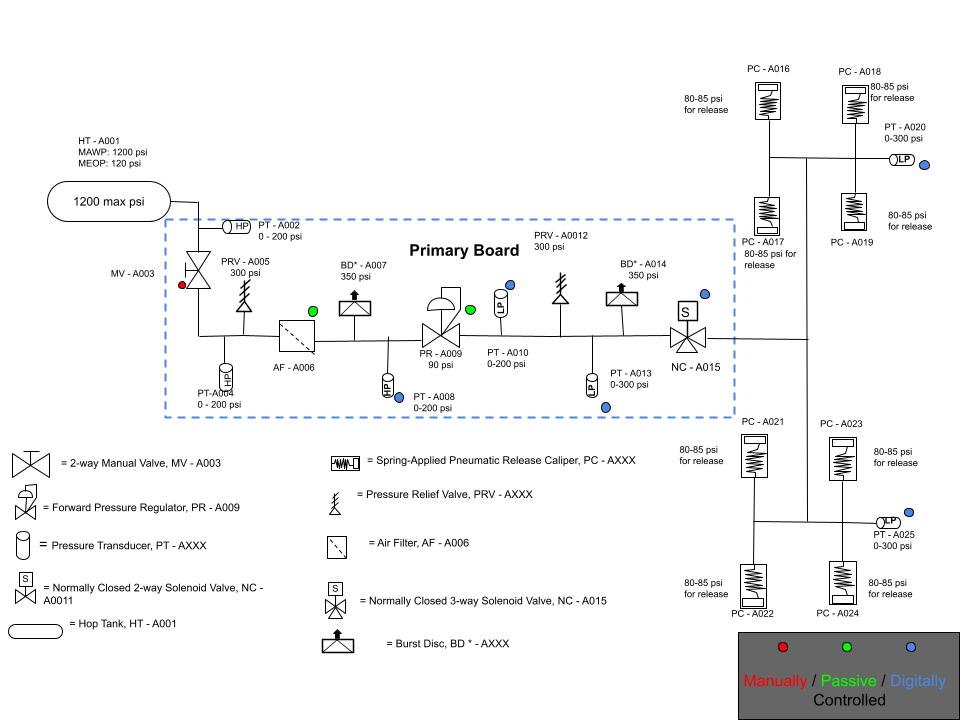
The core challenge was designing a fail-safe architecture that maintains pressure below MAWP under all operating conditions. The updated P&ID uses a hop tank for pressurized supply, pressure relief valves as redundant safety layers, 3-way solenoid valves for actuation control, and transducers for real-time monitoring shared with the embedded systems team.
During this project, I was able to bring a lot of changes to the team including a professional mentorship from Mr. Shawn Victor, an experienced R&D engineer at SpaceX, a complete redesign of the pneumatic system architecture, and a new three-way solenoid valve with higher CV rating to meet flow requirements.
Tools Used: SolidWorks, P&ID Design, Hand Calculations, Assembly of Pneumatic Components
Updated P&ID: Redesigned to meet industry formatting and safety standards, reallocated 30% of project budget to enhance safety and monitorability without sacrificing performance:
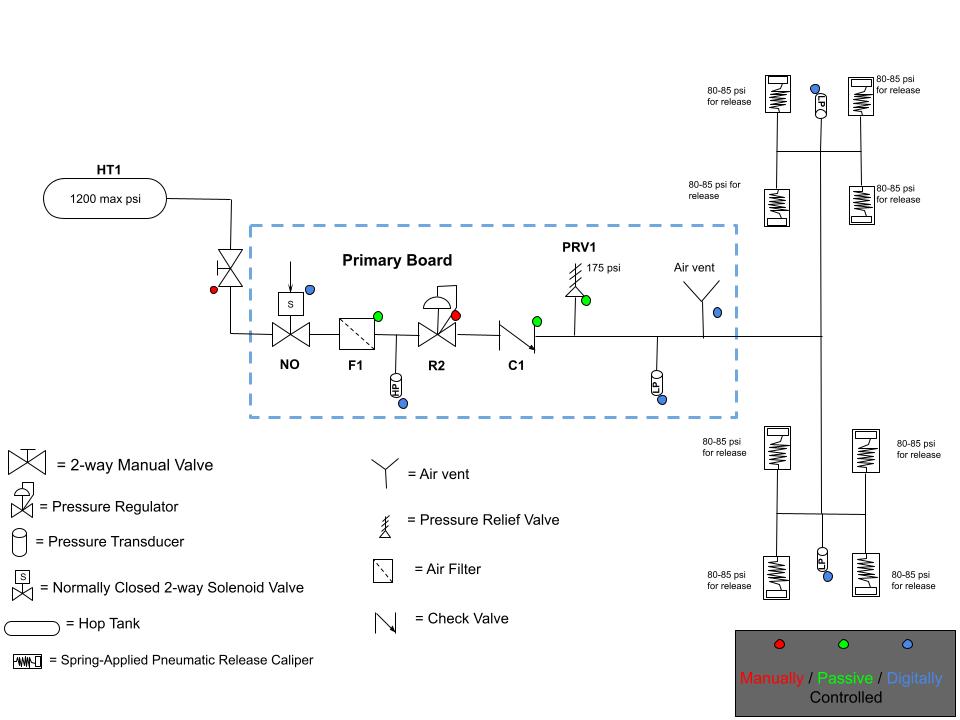
First P&ID: First P&ID our team produced. Used as the baseline for redesign. Didn't meet safety and formatting standards, as well as unnecessary and ambiguous components:
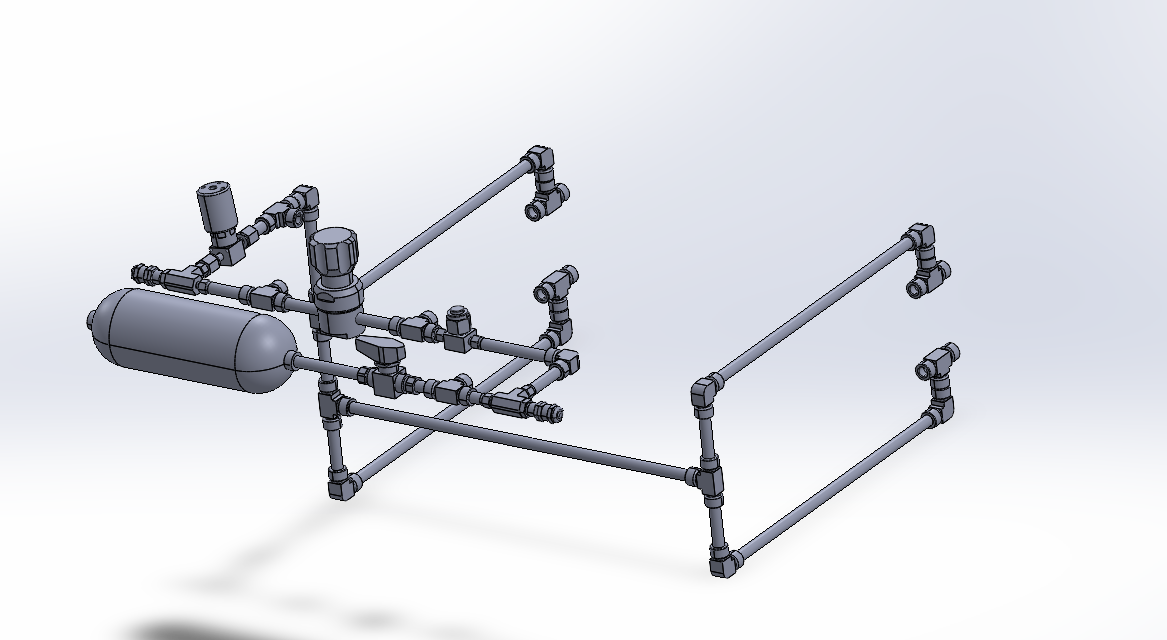
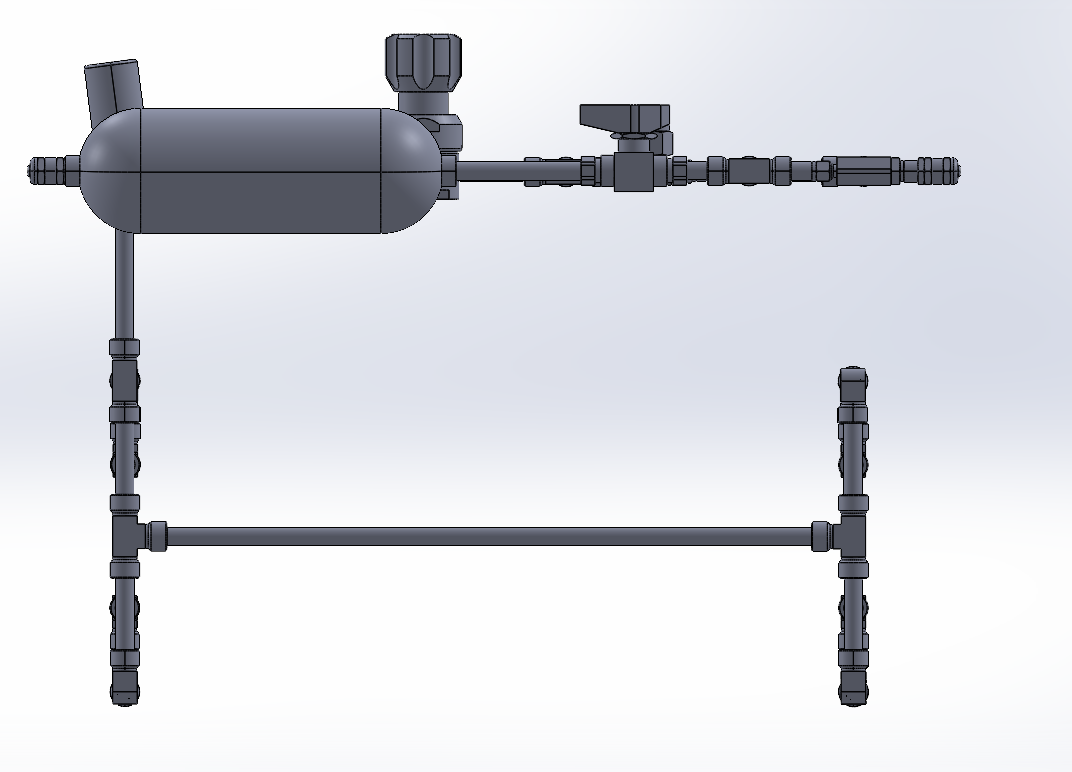
SolidWorks 3D model of the system — isometric, front, top, and right views:
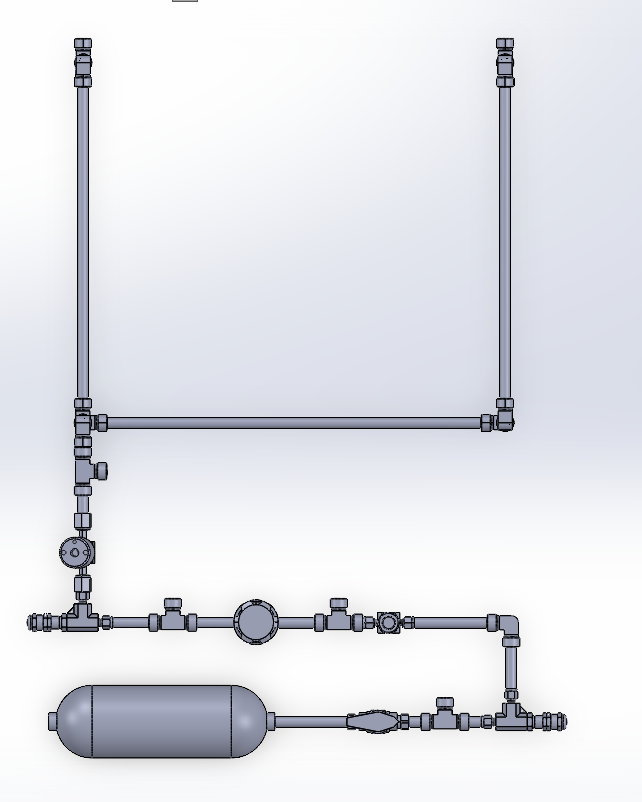
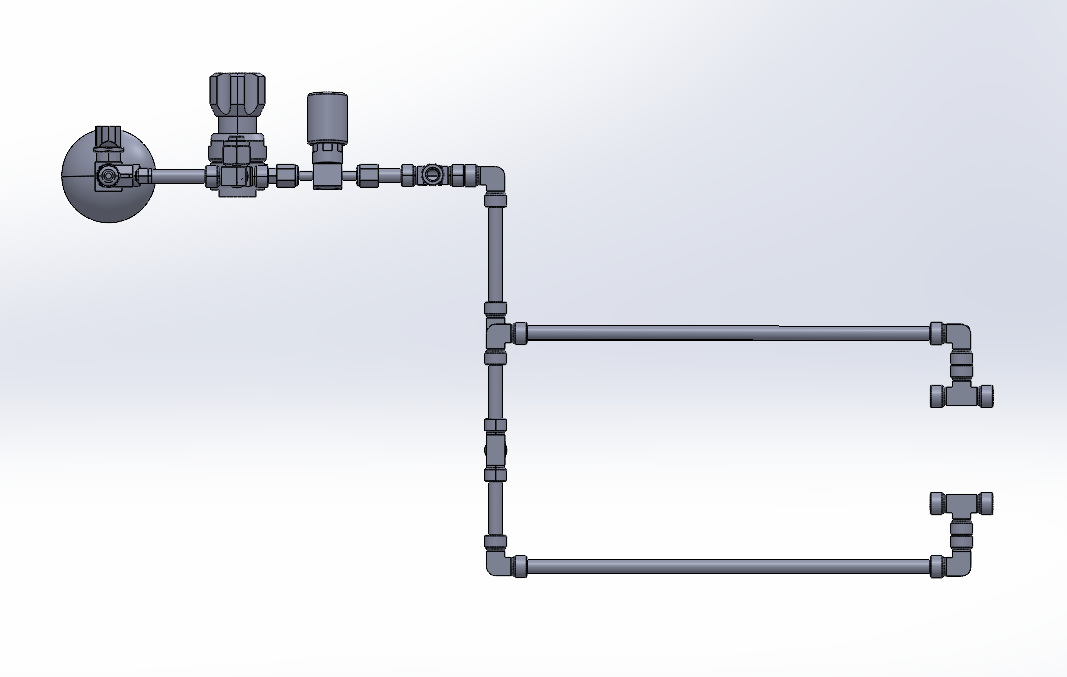
During the validation phase, hand calculation was used to verify the system's ability to meet flow requirements for our engineering goals. From the calculations, I was able to determine that the original solenoid valve with a CV of 0.12 was not sufficient to meet our goal of creating an "emergency braking system" that could immediately halt the pod. The new three-way solenoid valve with a CV of 1, however, was able to meet the flow requirements and achieve the necessary braking performance.
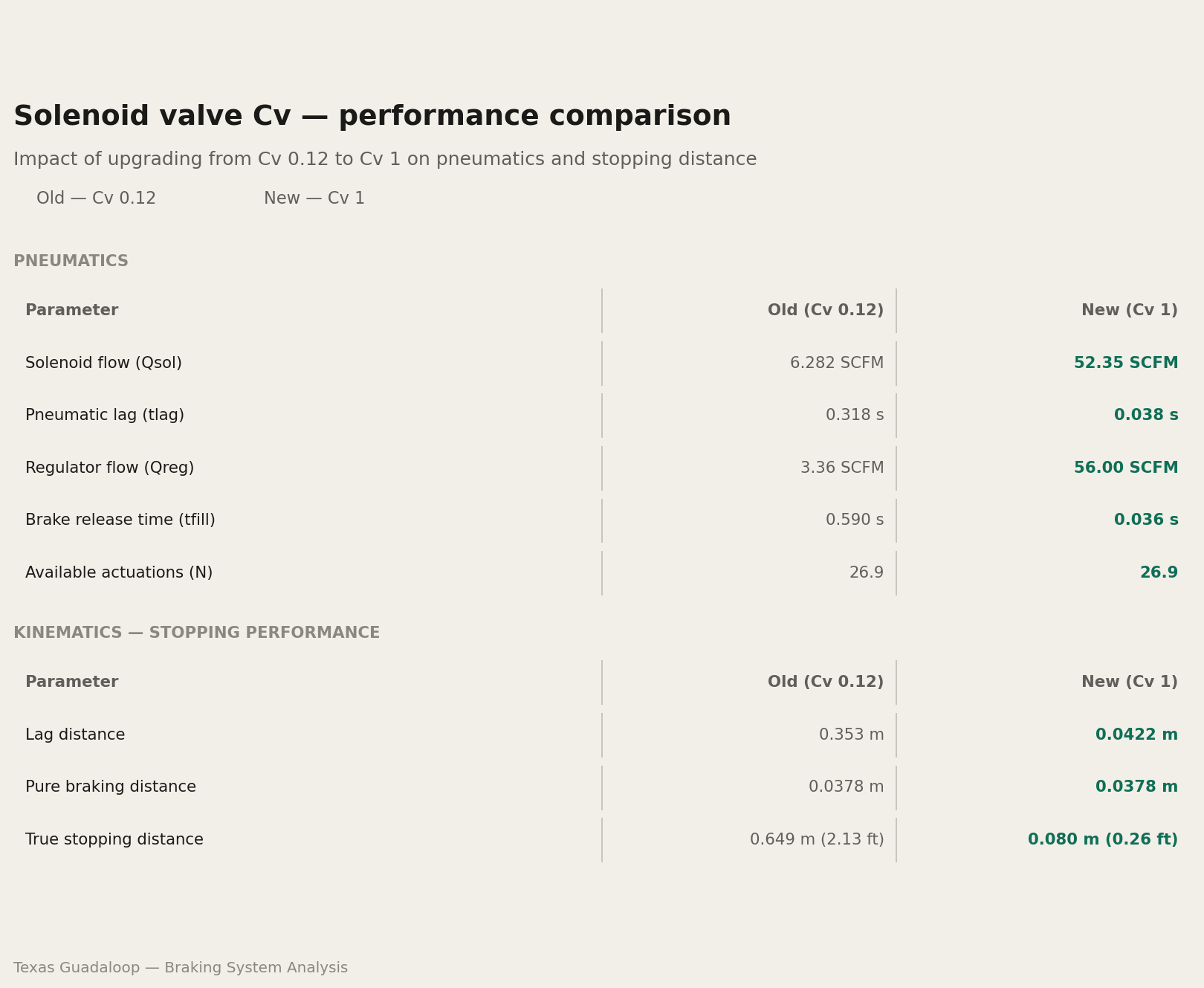
As a result, a new three-way solenoid valve with a CV of 1 was procured to meet the system's flow requirements and achieve the necessary emergency braking performance.
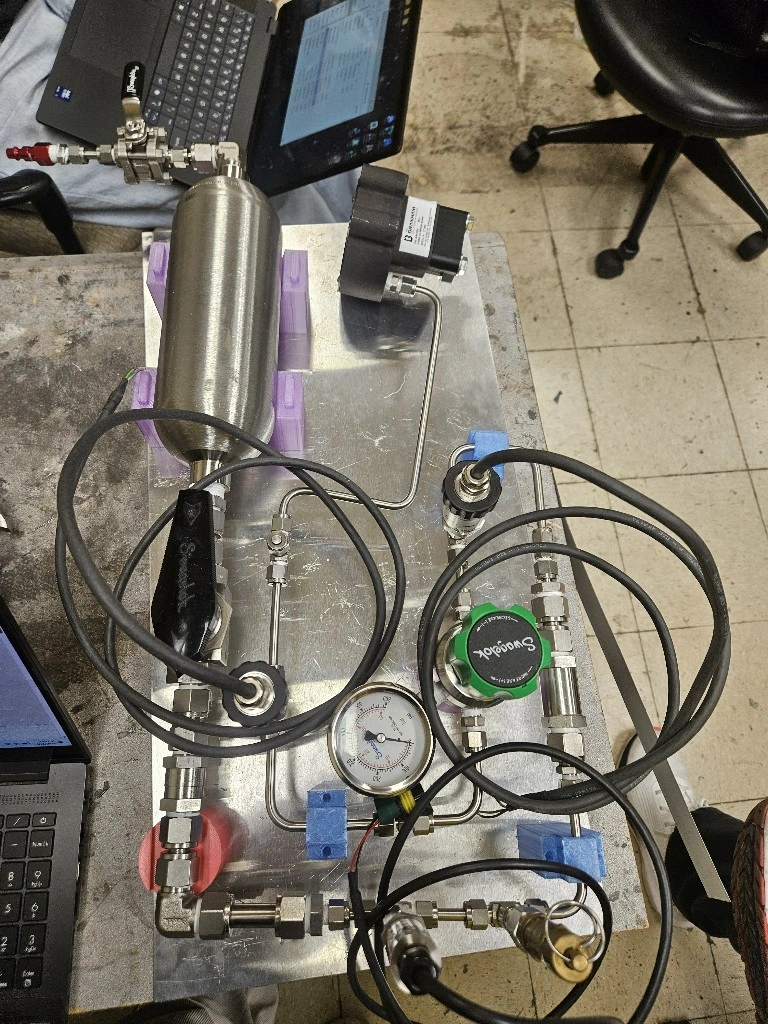
After validation phase, we began manufacturing the system. I didn't take ownership of the manufacturing process, but some of the things we implemented were a 3D printed support for heavy components like the hop tank and forward pressure regulator, and creating holes for screws on our braking board using the drill press.
Below is the manufactured system for showcase from the top:
For next year's design cycle, we will build the full braking system with 8 calipers instead of 1, then work on integrating the full system with the pod to bring to European Hyperloop Week 2027.